The iceberg theory … but make it horsey!
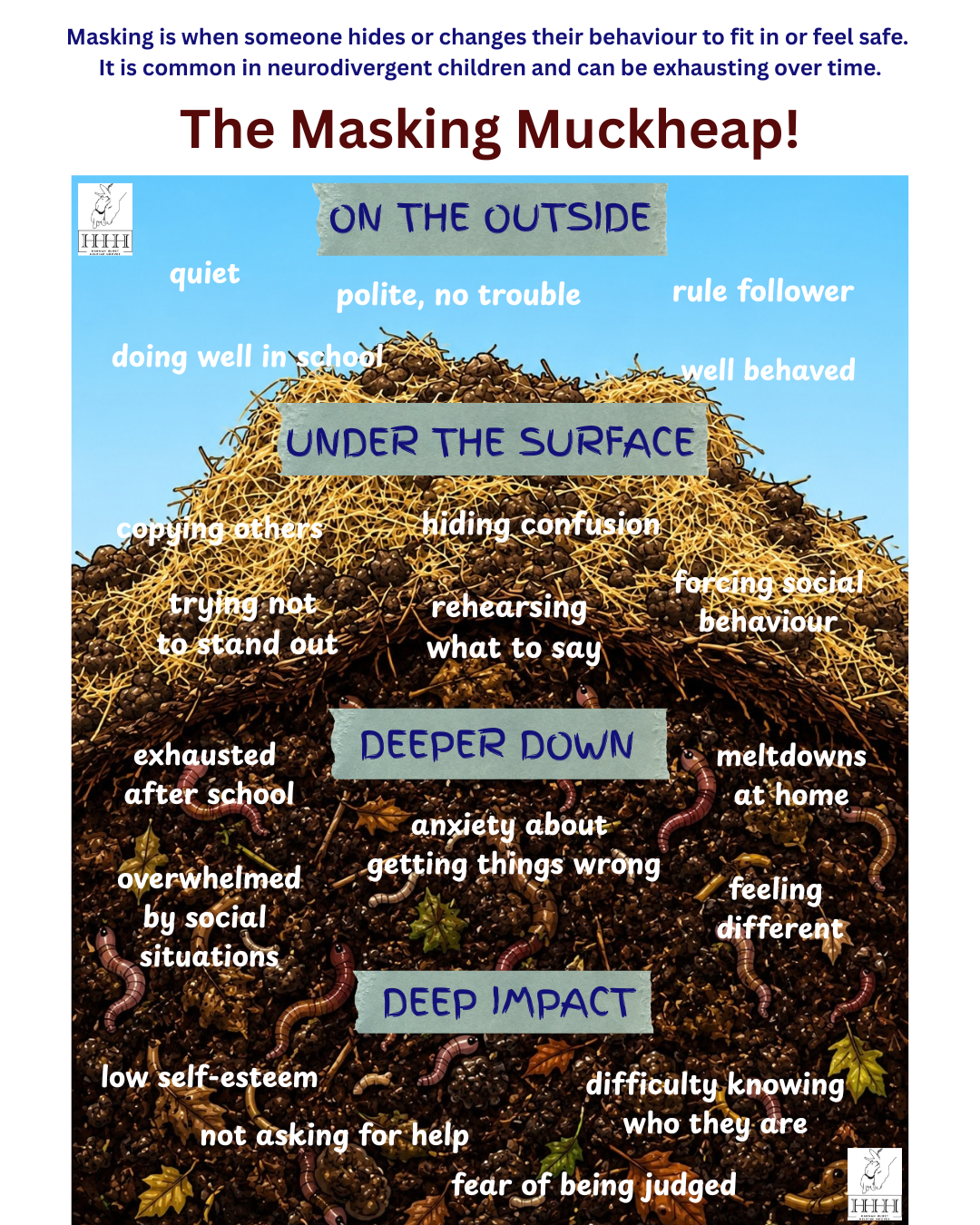
This visual poster explains the concept of masking, showing the clear difference between what can be seen on the outside and what may be experienced underneath.
The resource uses a simple muck heap model to break this down. The top section shows behaviours that are often praised or misunderstood, such as being quiet, well behaved, doing well at school or appearing to cope. Under the surface, it highlights the effort behind these behaviours, including copying others, forcing social interaction, hiding confusion and trying not to stand out. Deeper levels explore the emotional and mental health impact, such as anxiety, overwhelm, exhaustion, meltdowns at home and feeling different. At the deepest level, it shows the longer term impact on self-esteem, identity, help-seeking and fear of judgement.
This resource is to help build awareness of masking behaviour - particularly in children and young people. It helps others understand behaviour that may otherwise be misread, supporting a more compassionate and informed response. It can be used to start conversations about emotional wellbeing, mental health, behaviour and unmet needs.
Suitable for parents, carers, teachers, SEN staff, equine facilitated practitioners, riding instructors, social workers, therapists, counsellors and other professionals working with children and teenagers.
Free to download :)
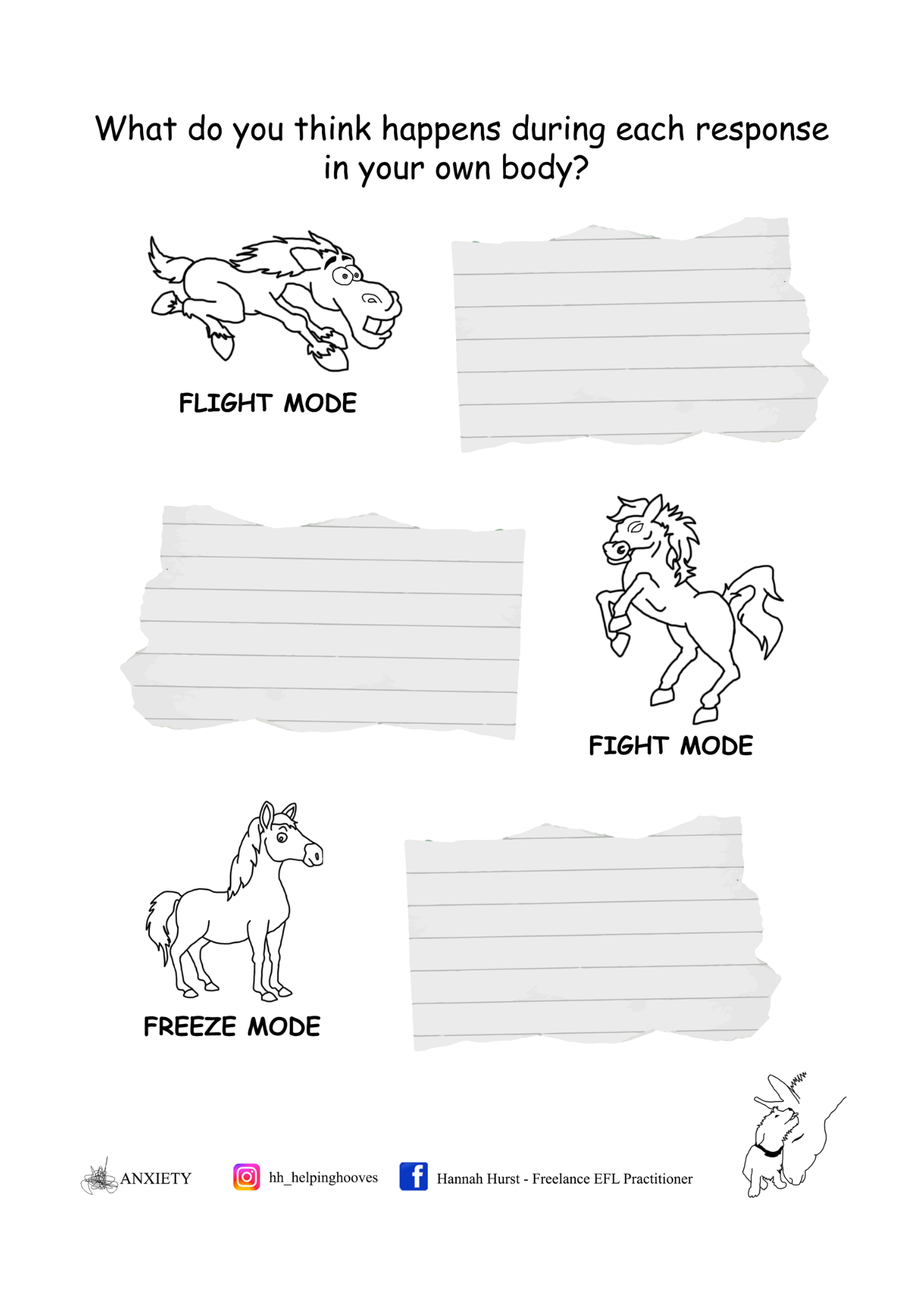
Anxiety can affect both our minds and our bodies and sometimes it can be difficult to understand what we're feeling or know what to do when worry starts to take over.
Calm Horse, Calm Mind is a six-week programme that uses the unique connection between people and horses/donkeys to help children and young people explore anxiety in a practical, engaging and relatable way.
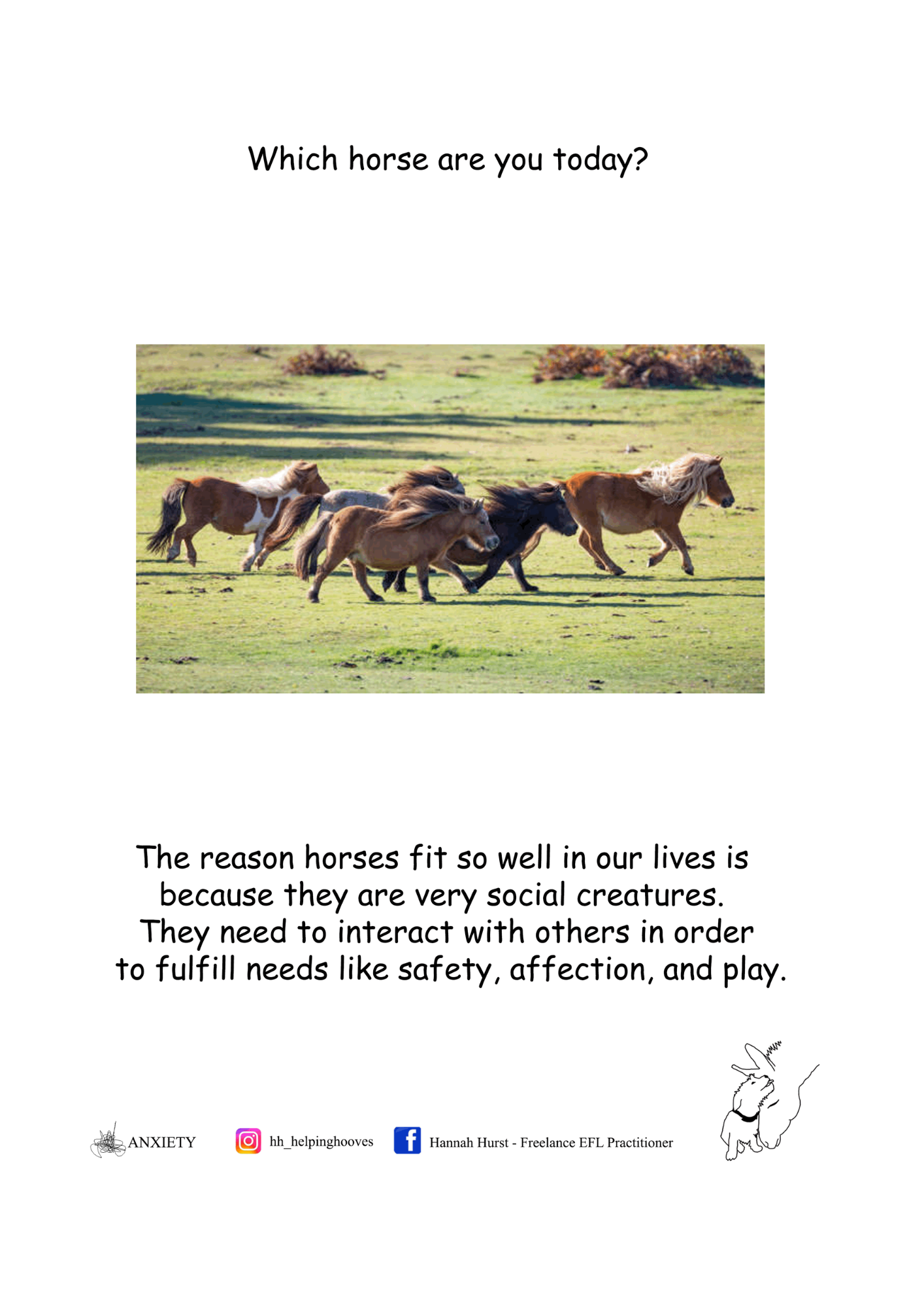
Over the six weeks, we will learn to recognise what anxiety can look and feel like, both in ourselves and in the animals around us. By observing the horses and donkeys, noticing their body language and responses, and reflecting on our own experiences, we can begin to understand that anxiety can show up differently for everyone.
🐴 What is anxiety?
Understanding what anxiety is, why we experience it and how our brains and bodies respond when we feel worried or unsafe.
💭 Recognising worry and anxiety
Learning to notice the thoughts, feelings and physical sensations that can tell us when anxiety is present.
🐎 Understanding our horses and donkeys
Looking at how animals communicate worry, uncertainty and stress through their behaviour and body language.
🧠 Finding strategies that help
Exploring practical ways to support ourselves when anxiety appears, as well as ways we can help our horses and donkeys feel calmer, safer and more confident.
❤️ Building confidence and connection
Developing self-awareness, emotional understanding and the ability to recognise when we might need support.
The programme is not about making anxiety disappear. Instead, it is about developing an understanding of anxiety and building a toolkit of strategies that can help us manage those big feelings.
And, importantly, riding isn't required. The programme is about learning, connecting and working alongside the horses and donkeys, so there are opportunities for everyone to take part in a way that feels comfortable for them.
Six weeks of learning about anxiety, understanding our feelings and discovering ways to help ourselves, with a little help from our four-legged friends. 🐴💚
Helping children understand the messages their bodies are sending them
Our bodies are always giving us information. When we experience a big feeling, our brain sends signals to our body to help us respond and those signals can feel different for everyone.
The Herd of Feelings: Body Sensations personalised poster series helps children explore the physical sensations that can accompany different emotions, including anger, sadness, anxiety and worry.
Through simple, child-friendly language and engaging visuals, the series encourages children to pause and notice what is happening in their bodies. They might notice a fast heartbeat, tense muscles, a tummy ache, shaky hands, tiredness, watery eyes or feeling hot or cold.
The posters help children begin to understand:
🧠 My brain sends signals to my body.
🐴 My body gives me clues about how I am feeling.
💭 Different feelings can create different body sensations.
❤️ Everyone experiences feelings differently.
🌱 I can learn ways to help my body when big feelings happen.
The series is designed to be a starting point for conversation, emotional awareness and self-understanding. Children can use the posters to identify their own body signals, add their personal experiences and explore strategies that help them feel more settled.
Rather than telling children how they should feel, the Herd of Feelings approach encourages curiosity:
“What is your body telling you?”
These posters can be used at home, in schools, therapy settings or alongside other emotional wellbeing resources to help children develop the language and awareness they need to understand their feelings.
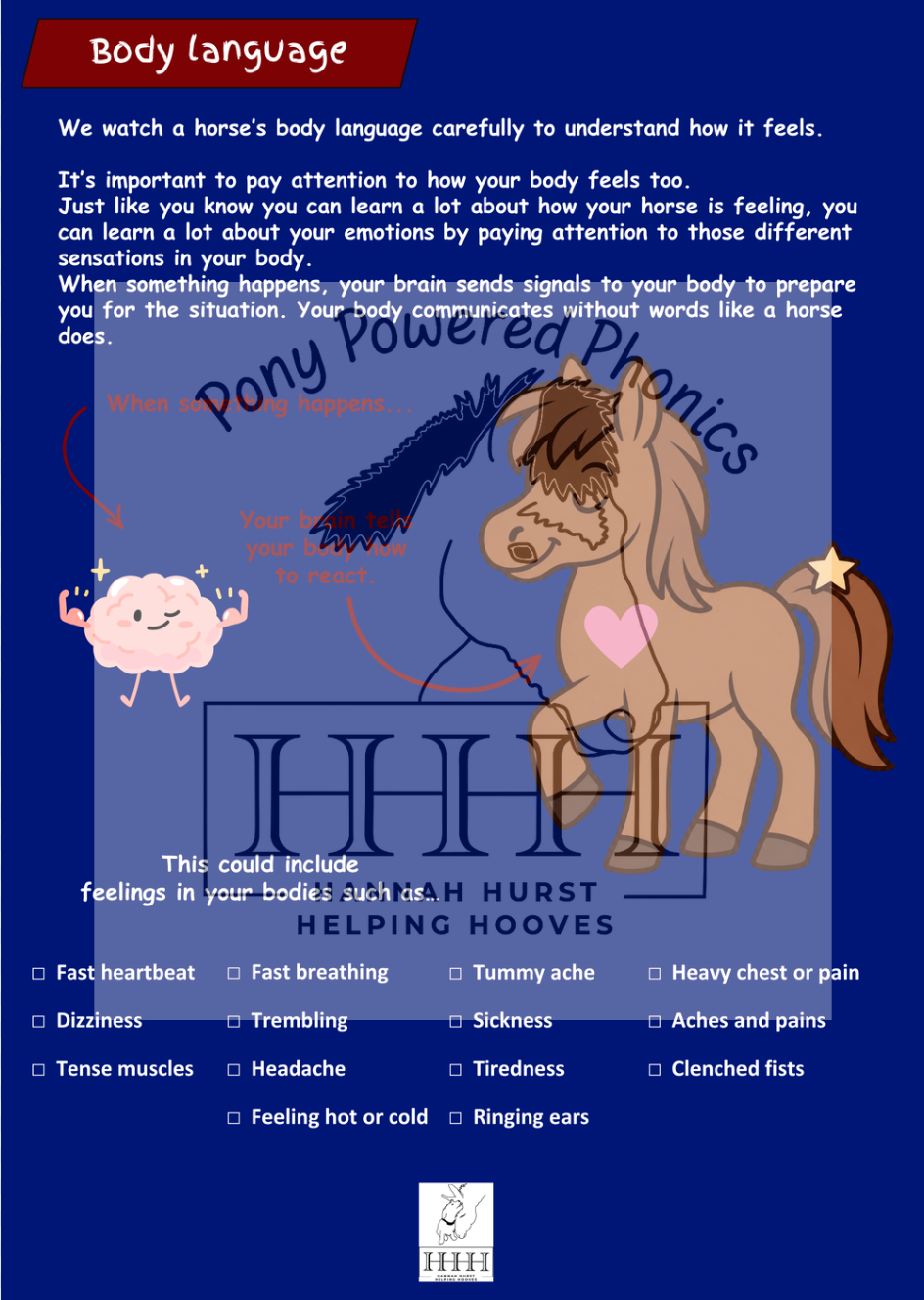
Your brain talks to your body!
Have you ever noticed that your heart beats faster when you're worried, your muscles tighten when you're angry, or your tummy feels funny when something doesn't feel right?
That's because your brain and body are always communicating. Just like we notice how a horse uses its body language to communicate, we can learn to understand our body language.
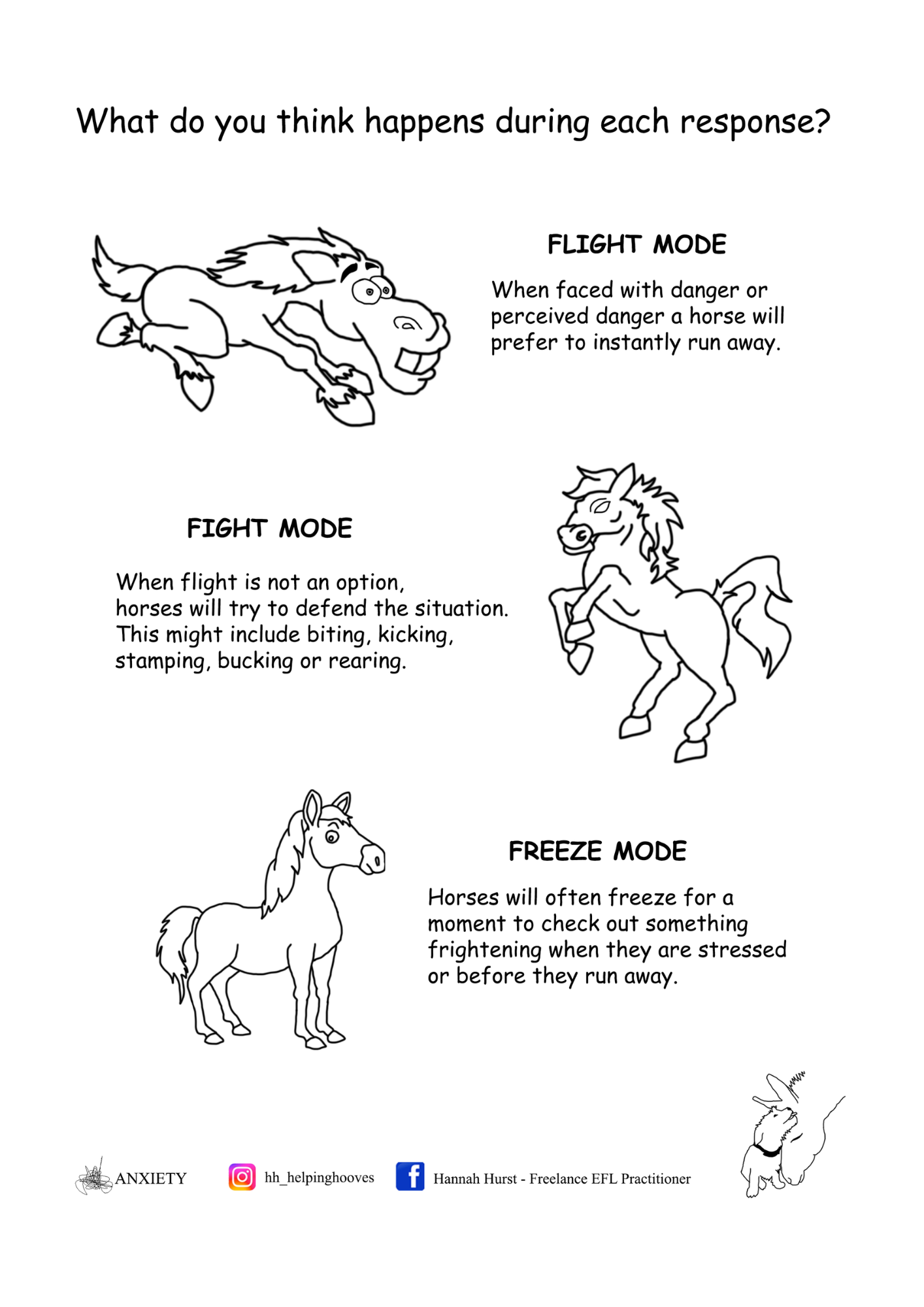
When something happens, your brain takes in the information and sends signals to your body to help you respond. Your body might get ready to run, hide, fight, freeze — or simply let you know that something needs your attention.
The important message here is:
Listen to what your body is telling you. 🐴💛
Once children learn to recognise these signals, they have a starting point for understanding their feelings, talking about what they need and exploring strategies that can help them feel safe and regulated.
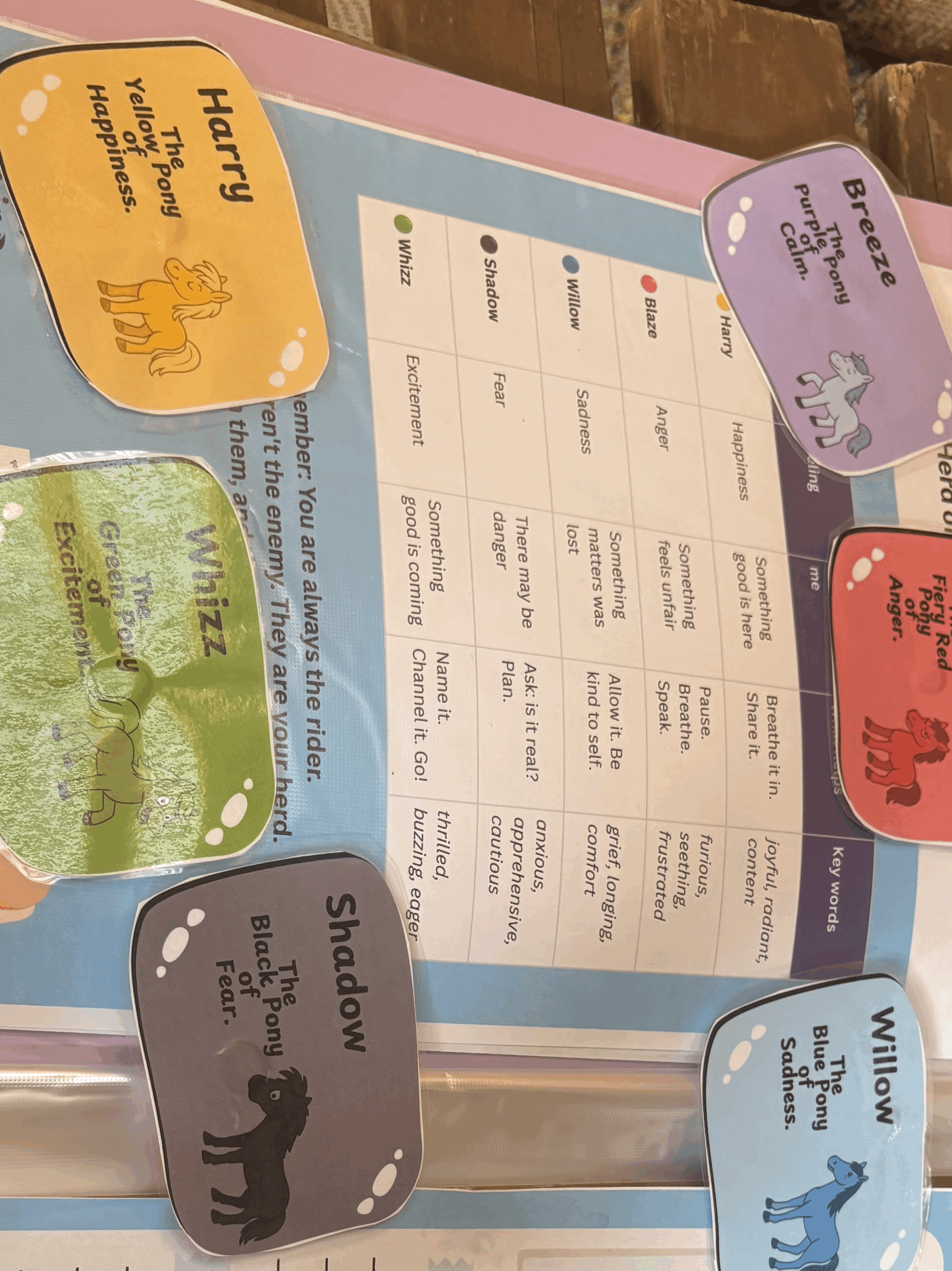
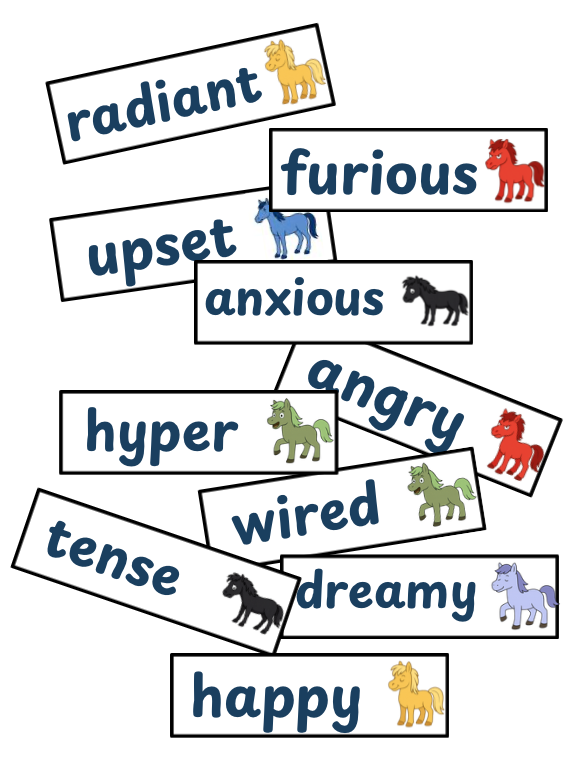
Help children explore and understand their emotions with this engaging set of Herd of Feelings emotion cards. Each horse from the Herd of Feelings has its own name and is paired with a different emotion, giving children a fun and relatable way to talk about how they feel.
The cards can be used to encourage emotional vocabulary, self-expression and discussion, helping children recognise and communicate their feelings in a gentle, horse themed way.
Perfect for classroom activities, group discussions, wellbeing sessions, emotional check-ins or individual reflection. Use the horses as conversation starters, ask children to choose the horse that best matches how they are feeling, or create your own activities around the different emotions.
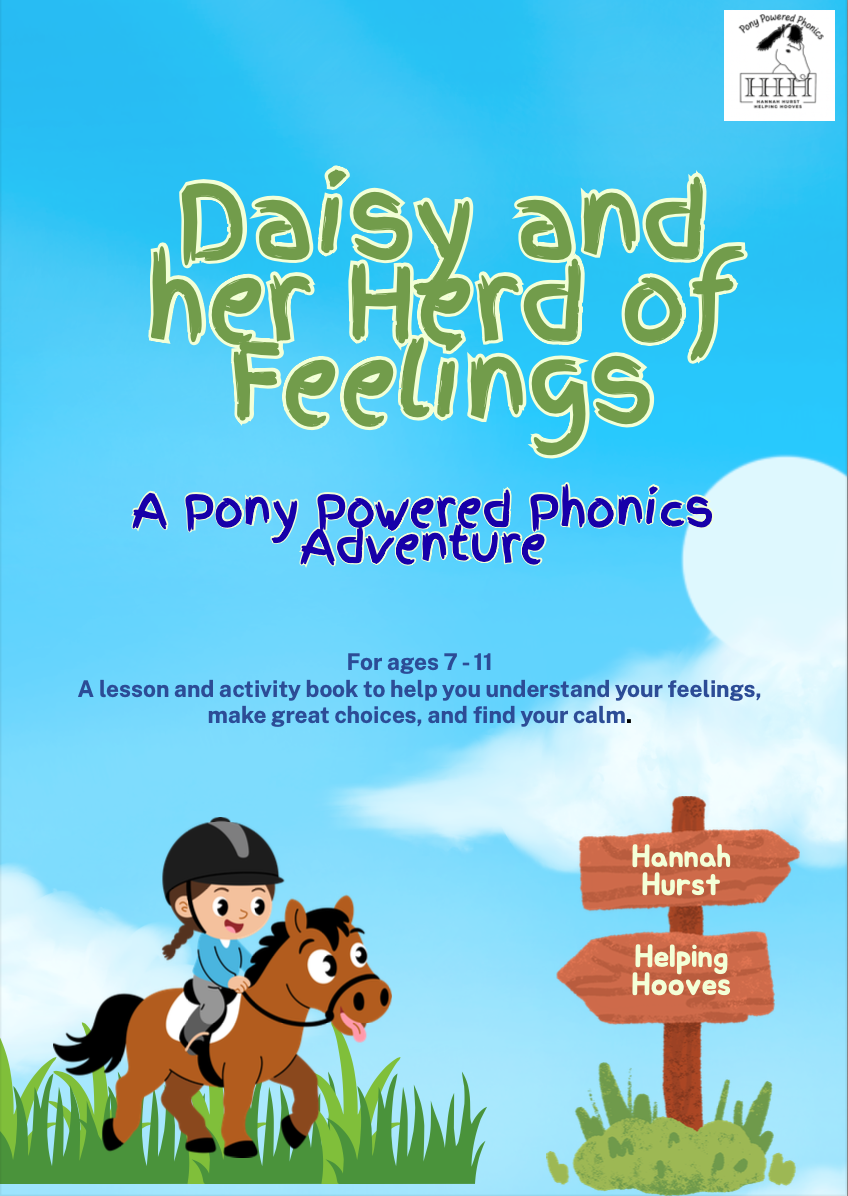
A Pony Powered Phonics Activity Book for Ages 6-10
Meet Daisy. She loves horses more than anything but she also carries a very busy mind, one full of worries that spiral, feelings that burst out unexpectedly, and habits she reaches for when everything feels like too much.
Sound familiar?
Daisy and the Herd of Feelings is a beautifully crafted lesson and activity book that uses the magic of horses to help primary aged children understand their emotions, build their emotional vocabulary, and make empowered choices, even when feelings gallop away with them.
This book uses a simple, powerful idea: horses live and react completely in the moment, just like our feelings do but unlike a horse, we have a pause button and this book teaches children how to find it.
Meet the Herd
🟡 Harry the yellow pony of Happiness
🔴 Blaze the fire red pony of Anger
🔵 Willow the blue pony of Sadness
⚫ Shadow the black pony of Fear
🟢 Whizz the green pony of Excitement
Each pony has their own chapter with a story, reflection questions, vocabulary activities, creative writing tasks, and a real life challenge. Together, they build emotional literacy alongside genuine literacy skills.
Designed to be used in school, at home, or in therapeutic settings. Perfect for PSHE lessons, wellbeing sessions, one-to-one support, or family reading.
Instant PDF digital download
Every child deserves to understand their herd and know that they are always the rider.
No results match your search. Try removing a few filters.