 Image 1 of 1
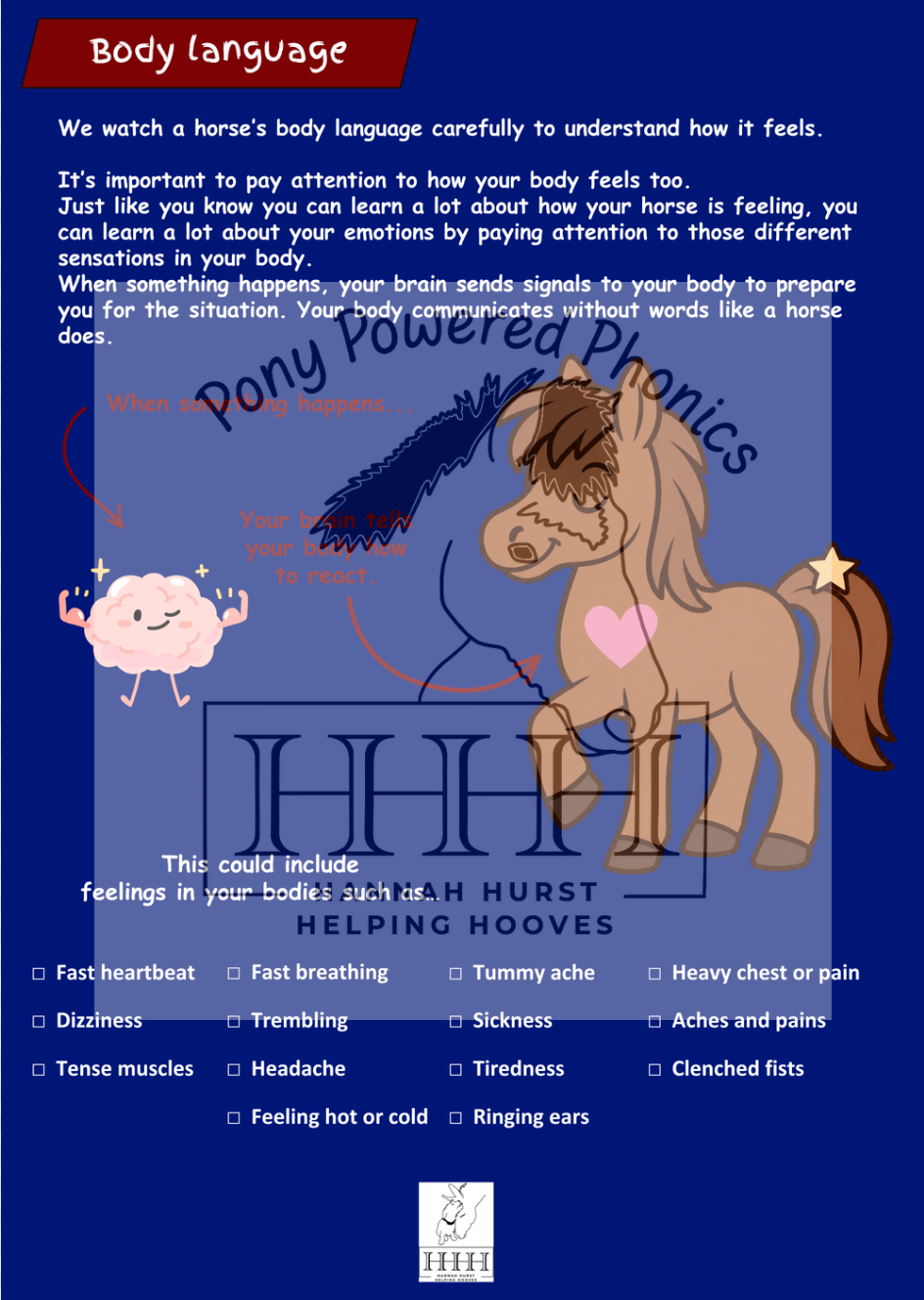
Your brain talks to your body!
Have you ever noticed that your heart beats faster when you're worried, your muscles tighten when you're angry, or your tummy feels funny when something doesn't feel right?
That's because your brain and body are always communicating. Just like we notice how a horse uses its body language to communicate, we can learn to understand our body language.
When something happens, your brain takes in the information and sends signals to your body to help you respond. Your body might get ready to run, hide, fight, freeze — or simply let you know that something needs your attention.
The important message here is:
Listen to what your body is telling you. 🐴💛
Once children learn to recognise these signals, they have a starting point for understanding their feelings, talking about what they need and exploring strategies that can help them feel safe and regulated.
Your brain talks to your body!
Have you ever noticed that your heart beats faster when you're worried, your muscles tighten when you're angry, or your tummy feels funny when something doesn't feel right?
That's because your brain and body are always communicating. Just like we notice how a horse uses its body language to communicate, we can learn to understand our body language.
When something happens, your brain takes in the information and sends signals to your body to help you respond. Your body might get ready to run, hide, fight, freeze — or simply let you know that something needs your attention.
The important message here is:
Listen to what your body is telling you. 🐴💛
Once children learn to recognise these signals, they have a starting point for understanding their feelings, talking about what they need and exploring strategies that can help them feel safe and regulated.